3DE: Design, Development, & Delivery
Every curriculum update raises the same question for the people delivering it: what changed, and why? This training video answers both. It walks 3DE educators through the structural updates to the 2024–2025 edition — the reasoning behind each decision, where to find everything in the new layout, and a live demo of the interactive elements built into the HTML-based course pages. If you're new to 3DE or returning after a year away, this is your orientation.
GSU Law: Making Evidence Stick
Caren Morrison is a gifted law educator. She wanted to make her class more user-friendly. By shifting to a hybrid model, we were able to meet the ABA requirements, yet provide flexibility. We decided the best approach would be to provide the lecture via video, and have an in-class meeting once a week to dive deeper into the lectured materials. But how to make sure students really “understood” the material to have that deeper conversation?
Using a tool called Playposit, Caren recorded audio lectures, with embedded questions that would stop the lecture and require engagement from the viewer. When the video moved on, the answer would be revealed to provide immediate feedback.
Questions were then “graded” and students earned a score for watching the lecture. The first year we allowed students to watch as many times as they wanted, and submit their “best” score. What we found was what we expected; a good number of students would watch, get the answers in the following section, then re-submit. For the second iteration, students earned a score with their first lecture rather than subsequent watches.
Likewise, in typical fashion, most students would wait until the night before class or the day of class to watch the recorded lecture, leaving little time for them to digest and think about the material. For the second iteration, we modified it so that the first-watch scores had to be submitted 48 hours prior to class.
It was these two simple adjustments that allowed for scores in the Evidence hybrid course to skyrocket. Using the same exact material as her original course, including the final exam, we were able to see the improvement of student achievement over the course of two fall semesters of teaching using this technique.
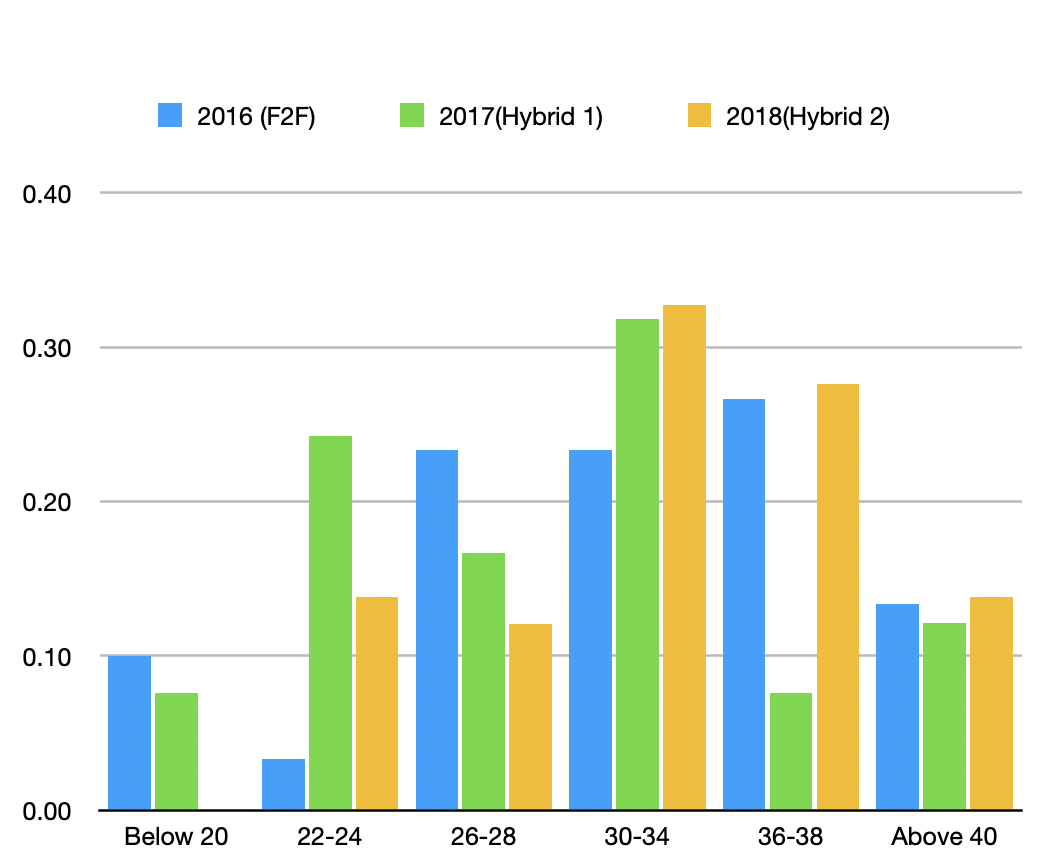
Since the number of students enrolled may vary, these results were based on percentage of students. The exam was worth 50 points.
Evidence Syllabus
This link will provide you access to the syllabus we used to develop these results. The syllabus is, in itself, a more novel, imaginative approach to syllabi. Created in a manner that looks more like a magazine page than a standard syllabi, this improved the consumption of the syllabi and was used in many courses throughout the law school as professors began to understand its value. While I don't take credit for the "idea", I did bring this concept to GSU and helped professors craft unique, engaging materials.